Showing posts with label News. Show all posts
Showing posts with label News. Show all posts
Wednesday, 6 March 2019

Monday, 22 January 2018
Practical: Front cover
TASK - Create a Front cover for The Daily Mail including all elements of an example cover for a made up story.
Story:
- Indiana Savannah - Friends with Meghan since 2005, used to be her make-up artist on set of NCIS. She is friends with Brett and advises him to cut Meghan out of her life.
-Brett is a film producer. him and Meghan were childhood friends and started to be more close in 2005.
- Meghan Markle 'behaved appallingly' and it has been said that she was with Harry for publicity and to boost herself up the social ladder.
- Prince Harry found text messages between the two - "Had Harry - Prince Harry - not found those text messages then she would have probably continued the affair for the rest of her life!"
Indiana have got some screenshots from Brett's text messages with Meghan like proof.
- Brett is a outgoing, easily manipulated, nice guy, Devastated, Hurtful, thought there was a future with Meghan, Bitter, Resentful, Shame that Meghan has treated him like this. 'Poor Brett.'
Article Layout:
- Who, What, Where, When, Why.- Further details/Quotes.
- Background, opinion, Future?
Example Newspaper:

This is the newspaper that i based my front cover off of showing 2 stories; one , on the right with a photo, and a main story taking up most of the space.
1) What was the task you were give and who was your target audience?
The task was to create a front cover for the Daily mail including elements of a traditional Daily Mail front cover with the main story being the one given. All other elements had to be made from scratch. The audience for this task was the readers of the Daily Mail, so adult around 20-40 years old, for a C1-2 audience.
2) What research did you undertake and what did you find were some typical conventions of a Daily Mail front cover - Layout, types of stories, font etc.
For research, I looked to find typical conventions of the Daily Mail to focus on. Then I analysed how the paper talked about certain issues and how they would show them. Some typical conventions included 3 main articles on the front cover; along the top, under the title of the paper was an article that would focus on what is included in the issue of the paper. Underneath that were 2 articles; one was the main story without a picture which would be the bigger headline and then an article underneath and the other was an article based more on reality which was placed along the right side of the page. The Daily Mail have their own font which they use in every single issue of the paper so i had to find a similar one and after trying some.
3) Which Daily Mail cover did you use as your main source? What are your observations from this source?
The Daily Mail cover I chose was a typical issue of the paper with the typical layout of a usual paper. From this I could copy the layout but I changed the articles. From this source I can also see the colors that the paper use in their front cover so by seeing this, I could copy the colour scheme so I can get an accurate copy.
4) Which areas did you find most challenging?
The areas I found most challenging when recreating this Daily Mail front cover was trying to match the fonts and get the correct spacing. Due to Daily Mail writing their own fonts it would be almost impossible to exactly match it so trying to find ones as smelt as possible was a challenge. Also, the spacing between the writing and text proportions were challenging to march and look even due to how much you had to experiment with the text sizing and stretching.
5)What was your initial feedback? what did others say about your production? How successful do you think it is?
I got feedback that my writing needed to be smaller in my article so that more could be fit in and so it was more typical to be Daily Mail. Other than these critics, my production was said to be good and my choice of stories, headline and wording was good. Overall, I feel like my end product was successful as it looks like a front cover of a Daily Mail issue.
6) Identify what went well and with hindsight, what would be done differently.
Overall, my front cover was shown to be very successful as it fitted with the conventions of the newspaper. All of my articles were said to be typical of the paper, my writing in the article was said to be conventional, I had a good choice of photos and my headlines were very good. However, in hindsight, my font in the article could be smaller to look identical to a typical front cover and then I could fit some more writing in and also, I could have worked slightly more on my spacing in some areas but overall I think my front cover was successful.
7) What have you learnt from completing this task?
From this task, I have learnt about all of the conventions of the Daily Mail and have focused on each element in more depth and have realised why they have done this. Also, through my research for the task, I have found many front covers for the Daily Mail and have seen how they approach different issues showing their views and biased thoughts.

Friday, 1 December 2017

Thursday, 30 November 2017

Wednesday, 29 November 2017
Representation of Youth

1.Who is being represented in this image?
2.Are you being given the stereotypical or countertypical image of the person/group? Describe the representation.
3.HOW is this representation being constructed by the media language? – consider camera angles, choice of images, colours, size, mise en scene, etc.
4.How is the representation being constructed by the text? – consider word choices, size of text, tone, etc.
5.Does this representation fit with the institutional codes and conventions? Explain your answer. – think about institution, audience, tabloid/broadsheet, etc.
The representation of this article is of teenager thug causing trouble in London. I think this due to the fact he's wearing tracksuit with hidden appearance suggesting that he's been making trouble or done wrong.Young people are used to wear Adidas so this is why he's being represent as a troubled youth. It immediately creates the stereotypical idea in the readers head that it is a youth, in a tracksuit who set the car on fire as they tend to cause trouble. The use of the word "ANARCHY" in large block capitals also makes the reader think that youths create trouble and go against the rules. They used this font to make it stand out to catch the readers attention. "Mindless Violence" is saying that all youth are mindless and stupid, as they don't know what they are doing which is an incorrect stereotype. The use of red font creates a negative image as red is typically used to portray death, sadness, or
pain. The slightly formal use of language is used to make them seem better that the people who are creating the riot. The representation has been constructed by the use of Photoshop, from a man who has actually 35 so not a teenager and a car on fire, to make it look bad to The Suns audience which is middle class. The colors of the fire straight away create a negative vibe, and the choice of person used also makes a negative vibe due to their posture and choice of outfit. The camera angle has made it seem as like it is a result off the mans actions, when it is not. The size of the person compares to the fire is out of proportion meaning that it it makes the man seem powerful, and therefore makes the reader think that he is intimidating and people should be scared of him, adding to the incorrect stereotype.
This article fits in with the typical tabloid codes and conventions as the large and colorfull image on the front cover, the main word in a big font, and this is what a typical "The Sun" readers likes
Tuesday, 28 November 2017
Different Perspectives: The Times and Daily Mirror

What do you notice about the different in content and how the articles convey this information? Why do you think that is ?
The Times: The language used was much more detailed and informative. Approach to the story appears to be respectful and formal. The Times is a broadsheet and is generally formal and informative. The Times used a variety of quotes from witnesses such as "I heard shouting," and "It's been very tense". Used a more holistic approach, looking at multiple factors of the story.
Daily Mirror: The language used it wasn't much detailed and informative like The Times. The Daily Mirror made the article more personal, getting straight into the story of the article. The Mirror is a tabloid and therefore attracts its readers attention with dramatic stories. Centered the article around the children. Mentioned the children names, Gabriel and Maria, used their images and used the quote said by the father and suspect, "Maybe they are not my kids"
This may be because readers of The Times would be more
interested to know information on why the attack could have occurred rather
than who was involved in the attack whilst readers of The Daily Mirror want to know
what happened and who it happened to, then they will move on to a different
scandal or attack.
Monday, 20 November 2017
Bias in the news
1. Bias through choice of photos, captions and camera angles - Does the person look empowered? Weak? Foolish? etc.

2. Bias through placement - is it on the front page or hidden an page 15? How long/through is in the article?

3. Bias through word choice and tone (is it sympathetic or critical?)

4. Bias through headlines - what is the headline article, and how is the article pitched through the headline?

5. Bias through source control - who have they interviewed / asked for information?

6. Bias through use of names and title - nicknames, respectful, terms, etc.

7. Bias through selection or omission - Which articles are included and left out?

8. Bias through statistics and crowd counts - How statistics are manipulated to make a point?


- The creater of this paper have chosen an unflattering image of this politician. The image of him eating a burger goes with the caption of save our bacon' which creates a comedic effect.
2. Bias through placement - is it on the front page or hidden an page 15? How long/through is in the article?

- On the front page of the newspaper however in terms of politics, bias comes in when the favorable party is positioned at the front of the appear the oppositional is at the back.
3. Bias through word choice and tone (is it sympathetic or critical?)

- Using words such as pledge and promise it highlights him as trustworthy member of parliament.
4. Bias through headlines - what is the headline article, and how is the article pitched through the headline?

- The headline for this article is relating a politician to a battle. This is emphasised by the word 'revolution' which suggests she is trying to get revenge or be bad which makes her sound very negative.
5. Bias through source control - who have they interviewed / asked for information?

- Known for his fiery strong opinions, Owen Jones shows bias in his works
6. Bias through use of names and title - nicknames, respectful, terms, etc.

- This writer has given a nickname to Jeremy Corbyn. They have called him 'Jezza' which is a kind of insult as if they are not taking him seriously.
7. Bias through selection or omission - Which articles are included and left out?
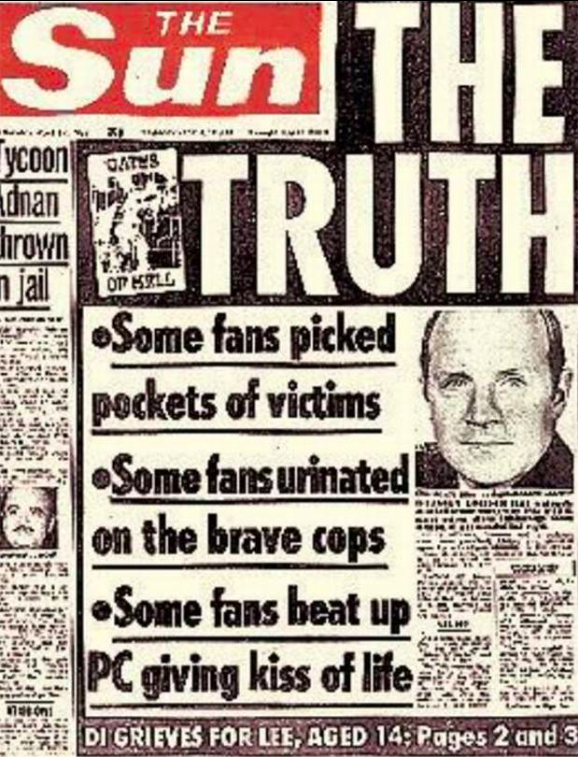
- Sometimes valid information i.e. "the truth" is left out of articles if not positive towards the party
8. Bias through statistics and crowd counts - How statistics are manipulated to make a point?

- The writer has used an unspecific amount to describe the number of casualties. Instead of an actual number, they have used 'mass' which indicates a very large amount have been effected.
Thursday, 16 November 2017


Wednesday, 15 November 2017
Politics and The Newspaper
- What is the Right Wing and Left Wing?
- Which paper supports which parties?

- RIGHT WING:
- Conservatives
- UKIP (UK Independence Party), BNP ( British National Party)
- Traditional values- love of the past (royals/veteran/ etc)
- "Survival of the fittest" - we should be able to keep the money we earn, because we deserve it.
- Don't believe in benefits/welfare for all
- Don't want the NHS, or state school - privatizations
- Tied to Christiane beliefs - against gay marriage/ some anti-abortion
- Pro-Brexit - anti-immigration
- Not worried about environmental
- Pro nuclear weapons
- LEFT WING
- Optimistic - Visionaries of the future (forward looking)
- Pro-Europe, Pro-immigration
- Pro-Multiculturalism
- Labour-The Green Party
- Welfare State- benefits "for the many, not the few"
- Higher texes- especially the rich
- Looking for more equality
- Idealist
- Fights for the women's rights, gay rights, etc
- Pro-nationalisation
- Very concerned with the environment
Owen Jones: Left Ring Journalist
In March 2017, Owen Jones went on record and describe the UK press as:
"Largely run by a very small group of very right-wing media moguls who defend the status quo of which they are part. If you are on the left and want to change society, the media will always come and get you."
Online news: Advantages and Disadvantages
ADVANTAGES:
- more practical
- can research what do you want
- more accesible
- more intractable
- up to the minute news
- apps make it more navigable
- archive facilitating
- navigate according to interest
- usually free
DISADVANTAGES:
- internet connection
- advertisement that could annoying you
- overload of news-flooded
- costs of broadband
- fake news
Thursday, 9 November 2017
Newspaper: Semiotic Analysis
Tabloid Analysis:
 This tabloid newspaper has hit the news values of "Unexpectedness"; "continuity". The headline is "CPS PROBE ON GREEN EXTREME PORN" that catch immediately your attention. The writing of the headline is very big and in bold so can catch your attention faster. At the top of the newspaper, alongside the masthead, is a story regarding a TV show "Strictly Come Dancing " It is positioned next to the masthead so when the customer is looking what paper it is, they immediately see this story.
The Sun is a tabloid also know as a redtop newspaper simply for the red surrounding color on the masthead. The colors of the main article give a denotation of being black and white however give a connotations of being a much more serious article in comparison to the colorful other surrounding articles that are of a more playful style.

Broadsheet Analysis:
This broadsheet newspaper has hit the news values of "Unexpectedness"; "Negativity"; "Elite person"
The front page uses an "elite person" Donald Trump, to sell the story as anything that concerns him is in the news. The background color in the photo give the denotation of red and white but gives connotations of the American flag which leads to a cross cultural story. The front cover has a few stories on it with bold subheading.
The Daily Telegraph is a right wing newspaper therefore includes a vast amount of their columns in relation to politics.
The Headline story on this picture front cover shows a sex scandal amongst ministers.
Monday, 6 November 2017
Newspaper Terminology
- Masthead (MH): Title of the newspaper displayed on the front page.
- Barcode (BC): Used to scan the newspaper, when purchasing. It is an optical, machine-readable, representation of data and contain information such as price.
- Caption (C): Brief text underneath an image describing the photograph or graphic
- Headline (H): A phrase that summaries the main point of the article. Usually in large print and a different style to catch the attention of the reader.
- Main Image (MI): Dominant picture, often filing much of the front cover.
- Page Numbers (PN): A system of organisation within the magazine. Helps you find what you want to read.
- Centre Spread (CS): A photograph, often in full colour, that runs across the middle two pages.
- Lead Story (LS): Main story, usually a splash
- Gutter (G): The blank space between margins of facing pages of a publication or the blank space between costume of text.
- Folio (F): Top label for the whole page. Can relate to the area covered in the paper for example. National or a big news topic such as Social Media, Syria.
- Page Furniture (PF): Everything on a page except pictures text of stories.
- Target Audience (TA): People who the newspaper aims to sell to
- Pull Quote (PQ): Something taken from within an article, usually said by the person in the main image.
- Classified Ad (CA): An advertisement that uses only text, as opposed to a incorporates graphics.
- Skyline (S): An information panel on the front page that sells the reader about other stories in the paper to tempt them inside.
- Edition (E): Some newspapers print several of these every night, these are versions with some changes and maybe additional late stories.
- Stand First (SF): Block of text that introduces the story, normally in a different style to the body text and headline.
- Byline (B): The line above the story, which gives the author's name and sometimes their job and locations
- Body Text (BT): Also known as copy. Written material that makes up the main part of an article.
- Standalone (SA): Picture story that can exit on its own or on a front page leading to a story inside.
Subscribe to:
Posts (Atom)


